October 1, 2026 · 6 min read
Is Everyone with My Surname Related to Me?
It happens to everyone. You meet someone, you hear their surname, and it’s the same as yours. The question comes on its own: are we related?
The short answer is: almost always, no. The long answer depends on just one thing, namely how many times your surname was born. Some were born thousands of times, in towns that knew nothing of each other. Others were born in one corner of Italy and stayed there.
Why are two people with the same surname usually not related?
In the Middle Ages surnames were born to tell people apart in the village. And the ways of telling them apart were the same everywhere: the father’s name, a physical trait, the color of someone’s hair.
Take Bruno. It was the nickname of someone with dark hair, and there was a dark-haired man in every village. Today it’s the 11th most common surname in Italy, with about 27,200 families and two hearts very far apart: Piedmont and the South. The Bruno families of Piedmont and those of Apulia were each born on their own.
It’s the same with Longo: the nickname was born wherever there was a man taller than the others. Di Martino means “son of Martino,” and it was born thousands of times, from fathers named Martino who weren’t related to each other.
Romano is the 7th most common surname in Italy, with about 29,500 families. It could mean an outsider from Rome, someone from a town called Romano, or the son of a man with that name. The more paths a surname has, the more founders it has.
Were place surnames born more than once too?
Yes, and in a particular way. A surname like Licata wasn’t born in Licata, where everyone was from Licata. It was born elsewhere, when someone left and the new neighbors called him “the one from Licata.”
But many people left Licata, in different centuries and for different towns. Each of them became “Licata” in the place where they arrived. The same goes for Butera, Randazzo, and Catania. Two families with a place surname may come from the same city, but the same city doesn’t mean the same ancestor.
And if the surname is rare?
Here the answer changes. A surname with few families, all concentrated in the same area, is more likely to have a single origin.
Rapisarda is a good example. There are about 2,600 families in Italy, concentrated in the province of Catania, and in Belpasso it’s the town’s most common surname. It has almost no variants. A surname this firmly rooted in its territory may have been born only a few times, all of them around Catania.
And yet, to the question “Are all Rapisardas related?” the honest answer is: not necessarily. Even if there were only one line, its founder would have lived many centuries ago. Two Rapisarda families today can have very different stories.
A rare surname can still have been born more than once. Scuderi has about 2,600 families, mostly around Catania. But it probably comes from a trade, the squire, and a trade could produce the surname in different places. The same squire gave different forms in Sicily, in Campania, and in Veneto.
Giacalone is the most common surname in the province of Trapani. It has two possible origins: the village’s “big Giacomo,” or a place near Monreale. Two different paths can mean two different families, with the same name.
How do you find out if two families are really related?
Two families are related when a document shows a common ancestor. The method is to trace each of the two back, one generation at a time, until the branches meet.
Family nicknames
You start with the oldest relatives: names, dates, towns. And above all, nicknames. In many towns in the South the same surname was carried by dozens of families. To tell them apart people used the family nickname, which in Sicily is called ‘nciuria. The nickname is often the key to telling apart two families with the same surname in the same town.
Records and parishes
Then you need documents. Every birth record gives the names of the parents, and that’s how you climb back. A great many 19th-century records can be viewed for free on the Portale Antenati of Italy’s Ministry of Culture. Before civil registration there were parish registers. From the Council of Trent, in 1563, every parish priest had to record baptisms and marriages.
Names that repeat
A useful clue is first names. In the South the first son was often named after his paternal grandfather, the second after his maternal grandfather. If two families repeat the same names generation after generation, it’s worth looking further.
A clue, however, is not proof. The same surname, the same town, and the same names aren’t enough. A DNA match doesn’t settle it either. It shows a shared ancestor, not which one, and for that you need the record where the two branches meet.
What your surname tells you, and what it doesn’t
The origin of the surname and the story of your family are two different searches. The surname tells you where the name comes from, how many times it was born, where it settled. The documents tell you which line you descend from.
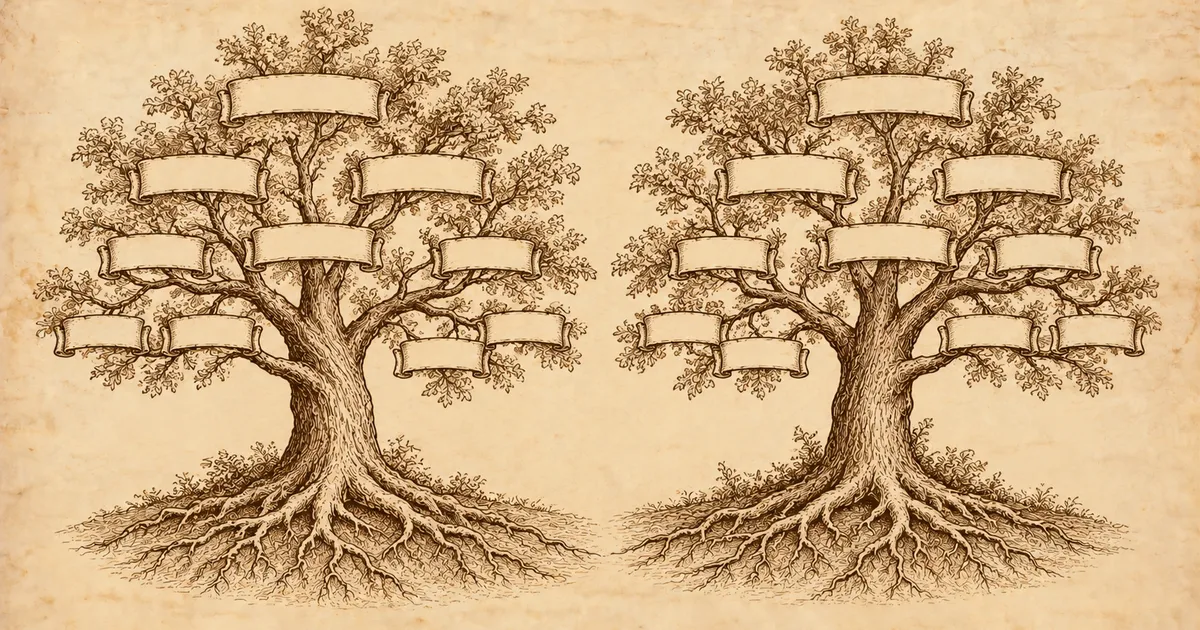
Knowing how common a surname is, and where, is the first step to understanding whether the other family could be yours. If your surname is one of those we’ve written about, the booklet gives you its map in Italy and around the world. It also lists the variants, when there are any. At the back you’ll find a guide to the first steps in searching for your ancestors, with a family tree to fill in.
If you’d like to compare the surnames of relatives and friends too, our three volumes gather hundreds of them, by area of Italy. For each one you’ll find its origin, the regions where it’s common today, and an estimate of how many people carry it.
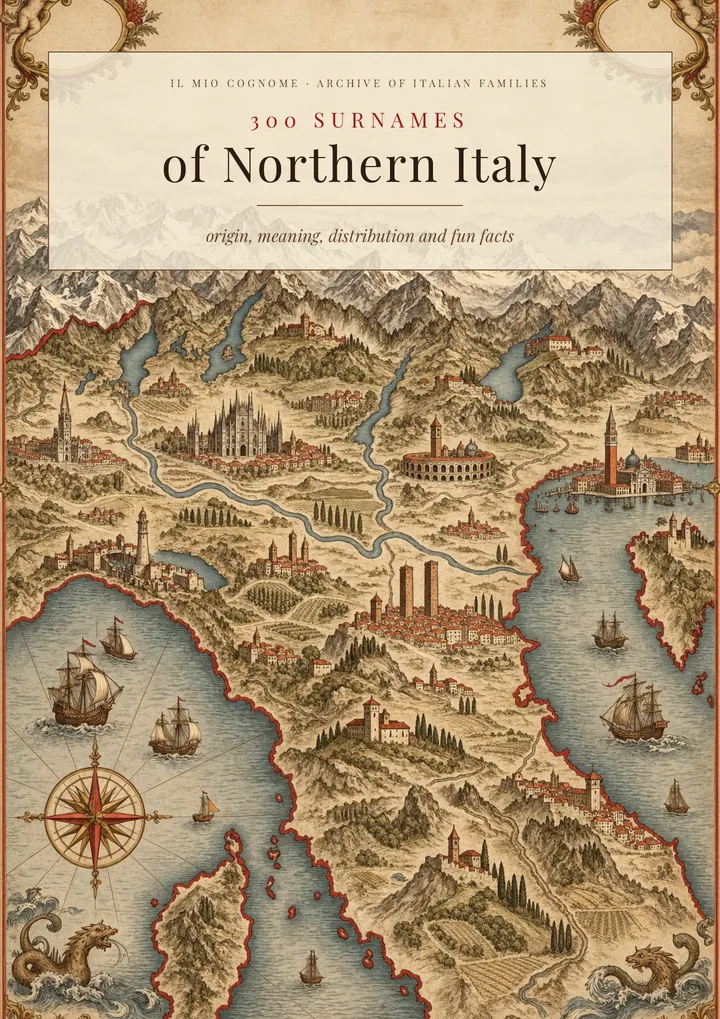
Surnames of Northern Italy
300 surnames · €19.90
Buy · €19.90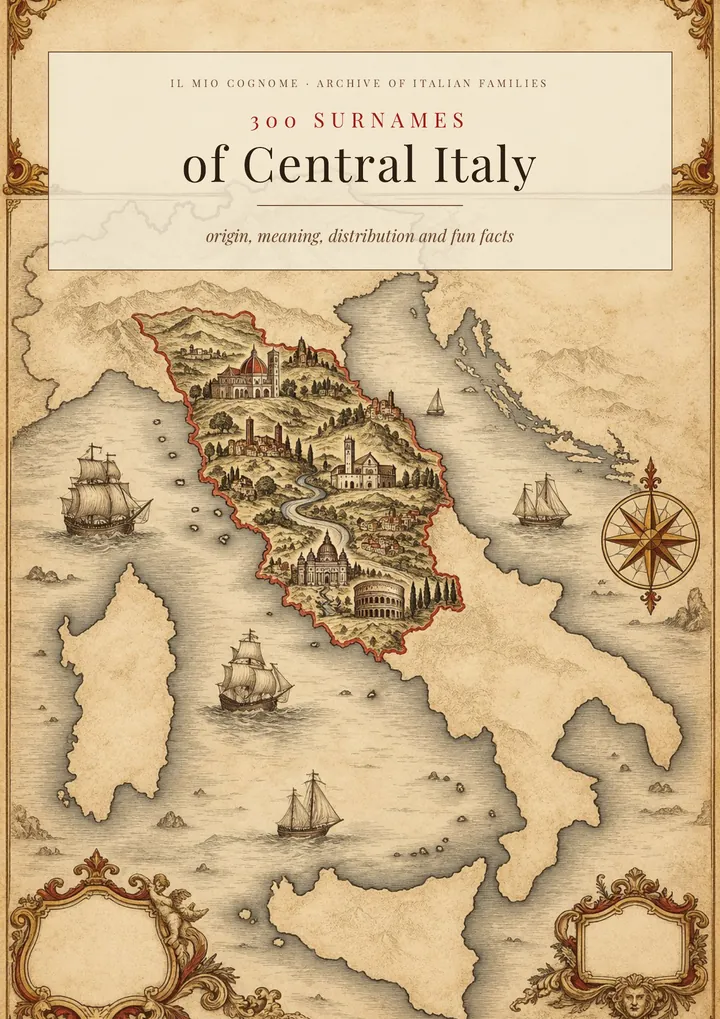
Surnames of Central Italy
300 surnames · €19.90
Buy · €19.90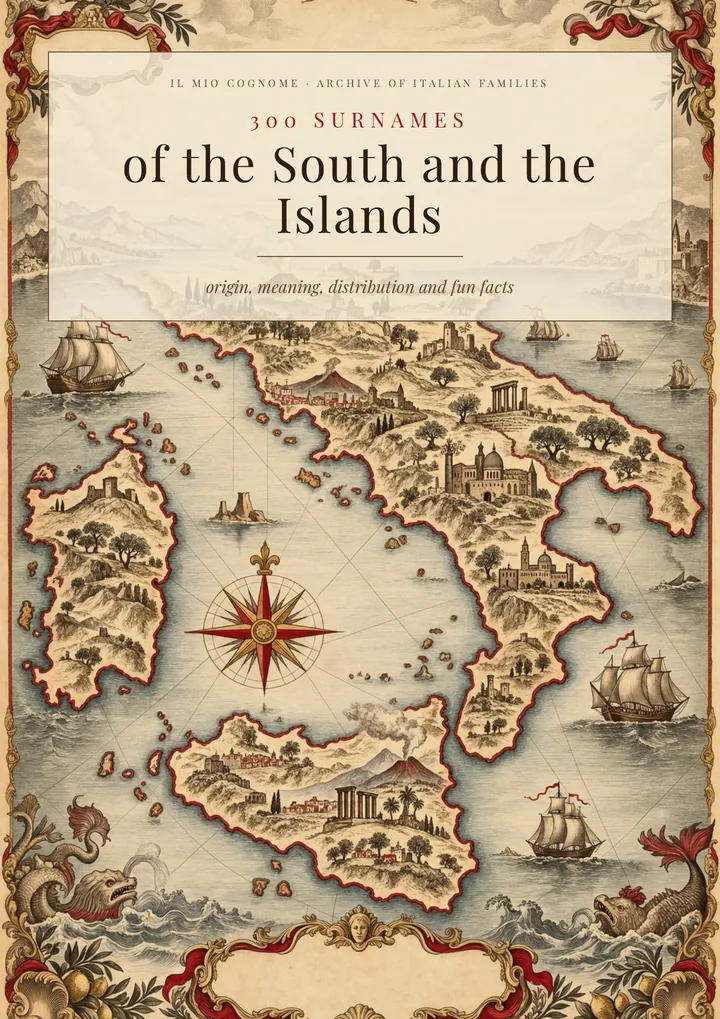
Surnames of the South and the Islands
300 surnames · €19.90
Buy · €19.90Want to know where your surname comes from? Look it up in the catalog or explore the volumes by area of Italy.