
Lombardy’s surnames, people by people
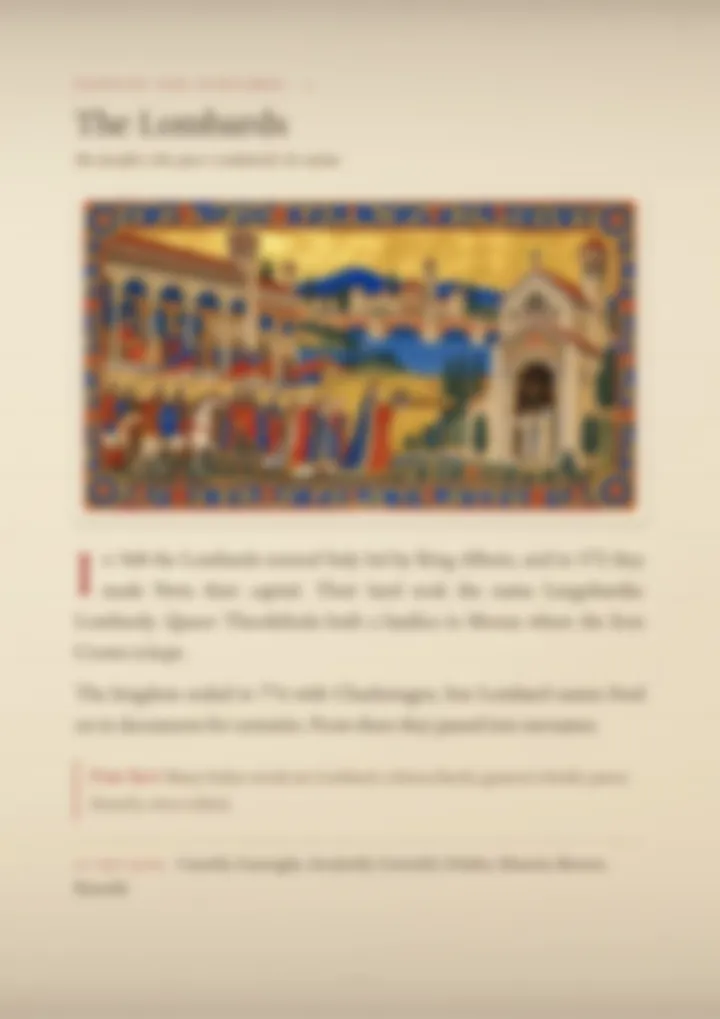
Before the Romans, the Lombard plain belonged to the Celts: the Insubres around Milan, the Cenomani between Brescia and Cremona. According to tradition it was the Insubres who founded Milan, and its Latin name, Mediolanum, very likely has Celtic roots: a place in the middle of the plain. From there come Milani and Milanesi. With the Romans, Lombardy became a land of cities, and between the 3rd and 5th centuries Milan was one of the capitals of the Empire: most Lombard surnames come from Latin, like Calvi, Magri and Grossi. In 568 the Lombards arrived, made Pavia their capital and gave the region its name, Langobardia. Their names lived on for centuries in documents and passed into surnames like Garavaglia, Arnaboldi and Castoldi.
After the year 1000 came the communes and their notaries, and from the gonfaloniere, who carried the commune’s banner, comes Confalonieri. Under the Visconti the name Galeazzo became fashionable, and from it came Gallazzi. Bergamo and Brescia remained Venetian from the 1400s to 1797; Milan was Spanish for almost two centuries. The foundlings of the Ospedale Maggiore, which had a dove in its emblem, were often given the surname Colombo, today the most common in Lombardy; others got a good-omen name, “Dio ti allevi,” “may God raise you,” which gave Allievi. And in the valleys, from Valtellina to Val Camonica, towns were small and families few: that’s why so many surnames, like Acquistapace and Gusmeroli, are extremely rare outside their valley.
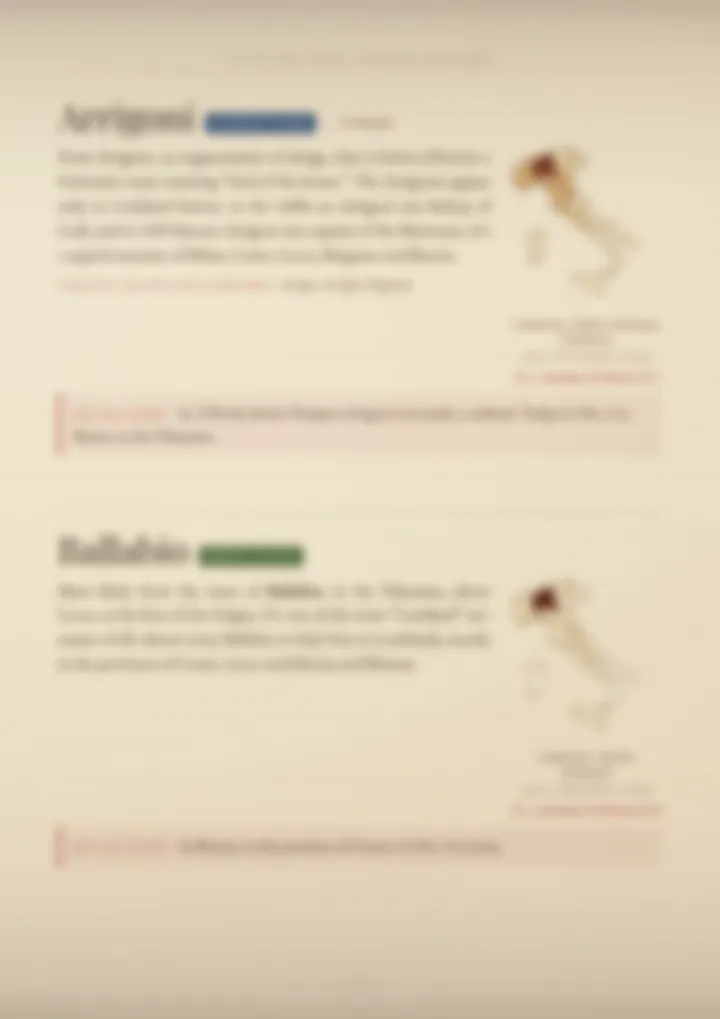
The volume gives a chapter to each of these ten peoples and stories, and for each one it lists the surnames in the book that carry its mark.
How to recognize a Lombard surname
In Lombardy surnames were born early, in the notaries’ deeds, and that’s why so many are names of towns: Arosio, Brivio, Cazzaniga, Vimercati. Some signs are easy to spot. The final -i marks the family: Colombo gives the Colombi, Rosso the Rossi. The ending -aghi comes from towns ending in -ago: Casirago gives Casiraghi, Cislago Cislaghi, Cambiago Cambiaghi. And around Bergamo the notaries’ Latin ending survives, as in Cortinovis and Maffeis.
Then there’s the family nickname, which in many towns of Brianza and the valleys still passes from father to son. It’s the same mechanism that, centuries ago, gave birth to surnames.
Province by province
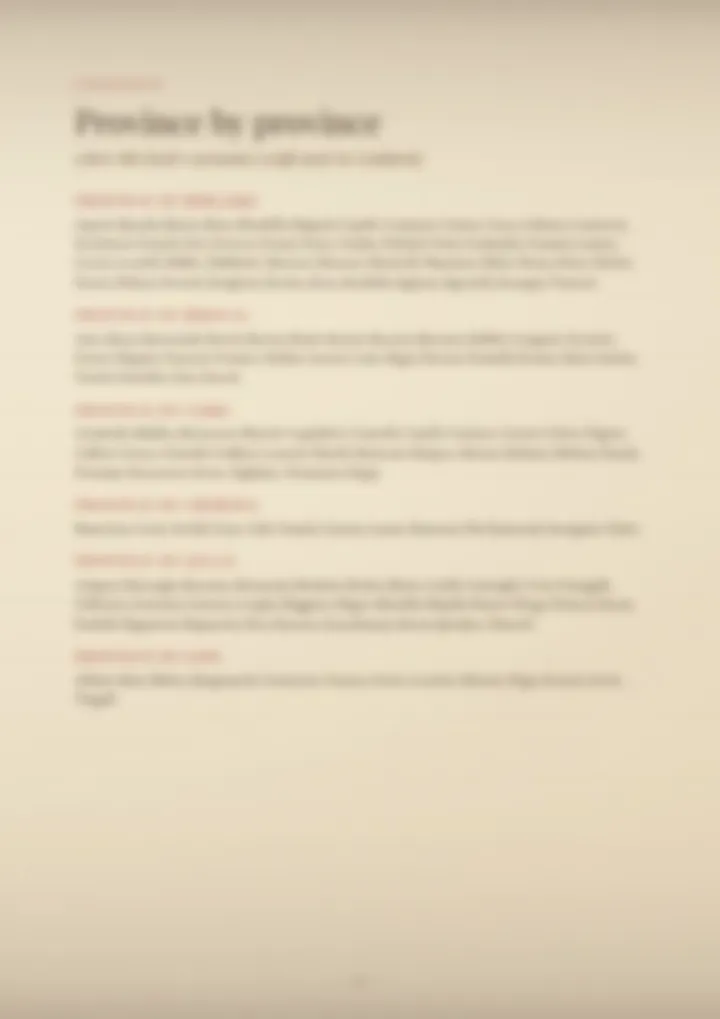
At the back of the volume an index gathers, province by province, the surnames that weigh most there: 274 surnames from the book, spread across the twelve provinces from Bergamo to Varese. Then comes the list of the 153 Lombard towns where a surname from the book is the most common: in Lissone, for example, No. 1 is Arosio, the name of a town in the Brianza near Como.
Is your surname in the volume?
Type it below: we'll tell you right away if it's there, and in which volume.
- Andreoli
- Arosio
- Arrigoni
- Ballabio
- Banfi
- Barbieri
- Barcella
- Baroni
- Basilico
- Bassi
- Bellini
- Belloni
- Belotti
- Beretta
- Bergamaschi
- Bernasconi
- Bertoli
- Bertoni
- Besana
- Bettoni
- Bianchi
- Biffi
- Bonacina
- Bonetti
- Bonfanti
- Bonomi
- Bosio
- Bossi
- Brambilla
- Bresciani
- Brignoli
- Brioschi
- Brivio
- Calvi
- Capelli
- Cappelletti
- Carminati
- Carrara
- Casati
- Casiraghi
- Castelli
- Castiglioni
- Castoldi
- Cattaneo
- Cavalli
- Cazzaniga
- Cereda
- Ceriani
- Chiesa
- Citterio
- Clerici
- Colleoni
- Colombi
- Colombo
- Confalonieri
- Consonni
- Conti
- Corbetta
- Corti
- Cortinovis
- Cozzi
- Cremonesi
- Crespi
- Crippa
- Croci
- Crotti
- Curti
- Facchinetti
- Farina
- Ferrari
- Ferrario
- Ferri
- Filippini
- Fontana
- Fossati
- Franchi
- Franzoni
- Frigerio
- Fumagalli
- Galbiati
- Galimberti
- Galli
- Gamba
- Gandini
- Garavaglia
- Gatti
- Gerosa
- Ghezzi
- Ghidini
- Ghilardi
- Giudici
- Giussani
- Granata
- Grassi
- Grazioli
- Gritti
- Grossi
- Guerini
- Invernizzi
- Lazzari
- Leoni
- Locatelli
- Loda
- Lombardi
- Longhi
- Longoni
- Lorenzi
- Lucchini
- Macchi
- Maggi
- Maggioni
- Magni
- Magri
- Mandelli
- Manenti
- Manzoni
- Mapelli
- Marchesi
- Marelli
- Mariani
- Marini
- Marinoni
- Martinelli
- Mascheroni
- Mauri
- Mazza
- Mazzola
- Mazzoleni
- Meroni
- Milanesi
- Milani
- Milesi
- Molinari
- Molteni
- Monti
- Morandi
- Moretti
- Moroni
- Motta
- Nava
- Negri
- Orlandi
- Panzeri
- Pavesi
- Perego
- Pesenti
- Pini
- Pirola
- Plebani
- Poli
- Porta
- Pozzi
- Pozzoli
- Previtali
- Radaelli
- Radice
- Raimondi
- Ratti
- Ravasio
- Re
- Redaelli
- Rigamonti
- Rimoldi
- Ripamonti
- Riva
- Rizzi
- Rocca
- Ronchi
- Rosa
- Rossetti
- Rossini
- Rota
- Ruggeri
- Rusconi
- Sacchi
- Sala
- Sangalli
- Scotti
- Signorelli
- Sironi
- Spinelli
- Spreafico
- Stucchi
- Tagliabue
- Testa
- Tosi
- Vailati
- Valsecchi
- Vavassori
- Vergani
- Vezzoli
- Viganò
- Villa
- Vismara
- Vitali
- Volpi
- Zani
- Zanini
- Zanotti
- Zappa
- Abbiati
- Acquistapace
- Airaghi
- Allievi
- Arici
- Arnaboldi
- Asperti
- Balconi
- Balzarotti
- Baresi
- Baronchelli
- Bartesaghi
- Beschi
- Bianchessi
- Bodei
- Bonanomi
- Borgonovo
- Bosisio
- Brembilla
- Broggini
- Buffoli
- Busnelli
- Cambiaghi
- Carnelli
- Casartelli
- Cattoni
- Cavagnini
- Cavenaghi
- Cerea
- Cislaghi
- Colzani
- Elli
- Facchetti
- Fenaroli
- Feroldi
- Fornoni
- Frassine
- Fratus
- Fusar
- Gaffuri
- Galbusera
- Gallazzi
- Grimoldi
- Gualandris
- Guffanti
- Gusmeroli
- Gusmini
- Lamera
- Lancini
- Lattuada
- Lavezzi
- Lecchi
- Leon
- Limonta
- Lissoni
- Luraschi
- Maffeis
- Maffioletti
- Magretti
- Marnini
- Marzorati
- Maspero
- Mattavelli
- Merati
- Meregalli
- Monza
- Paruta
- Pellegatta
- Perico
- Perletti
- Pintossi
- Pozzoni
- Prandelli
- Proserpio
- Quartini
- Ranghetti
- Ravasi
- Recalcati
- Restelli
- Roncoroni
- Saleri
- Santambrogio
- Savoldelli
- Scaccabarozzi
- Scalvini
- Scazzosi
- Seghezzi
- Severgnini
- Seveso
- Sirtori
- Somaschini
- Sonzogni
- Tettamanti
- Tremolada
- Vaghi
- Verderio
- Vimercati
- Visigalli
- Zaffaroni
- Zanardini
Surnames in red also have their own booklet.
FAQ
Is my surname in the volume?
The full list of the 300 surnames is on this page. If yours isn’t there, request it through our contact page: new booklets come from the most requested surnames.
How is it different from the volume on Northern Italy?
The Northern Italy volume picks 300 surnames from eight regions. This one is devoted to Lombardy alone: ten chapters on the region’s peoples and stories and, when there is one, each surname’s Lombard record. 88 surnames are in both: the other 212 you’ll find only here.
Will I find the surnames of my province?
At the back of the volume an index gathers, province by province, the surnames that weigh most there: 274 surnames from the book, spread across the twelve provinces from Bergamo to Varese, not just Milan. There’s also the list of the 153 Lombard towns where a surname from the book is the most common.
What’s the difference between the volume and a surname booklet?
In the volume each surname has a half-page entry: origin, map, variants and a fun fact. The booklet is devoted to a single surname and tells its story, its towns and its distribution in 12-19 pages, with a family tree and a scroll made out to that surname.
Does the volume tell me who my ancestors were?
No. A surname tells you where a word comes from, and two families with the same surname can have completely different stories. At the back of the volume there’s a guide to start searching for your ancestors in the archives, free and from home, with tips for Lombardy, where civil registration arrived with Napoleon and became permanent from 1866, in Mantua from 1871.
Does the volume include my surname’s coat of arms?
No, because a surname has no coat of arms: a coat of arms belonged to one specific branch of a family, not to everyone who carries the surname. When a fun fact mentions one, the entry says which family it belonged to.
What if scholars disagree about the origin?
We tell you. When an origin is certain, it’s written as certain; when it isn’t, the entry carries the gray “disputed origin” badge and gives you the theories.
Can I print it?
Yes, for personal and family use: you can print it for yourself and your relatives.


