October 1, 2026 · 6 min read
The Most Common Surnames in Italy, Area by Area
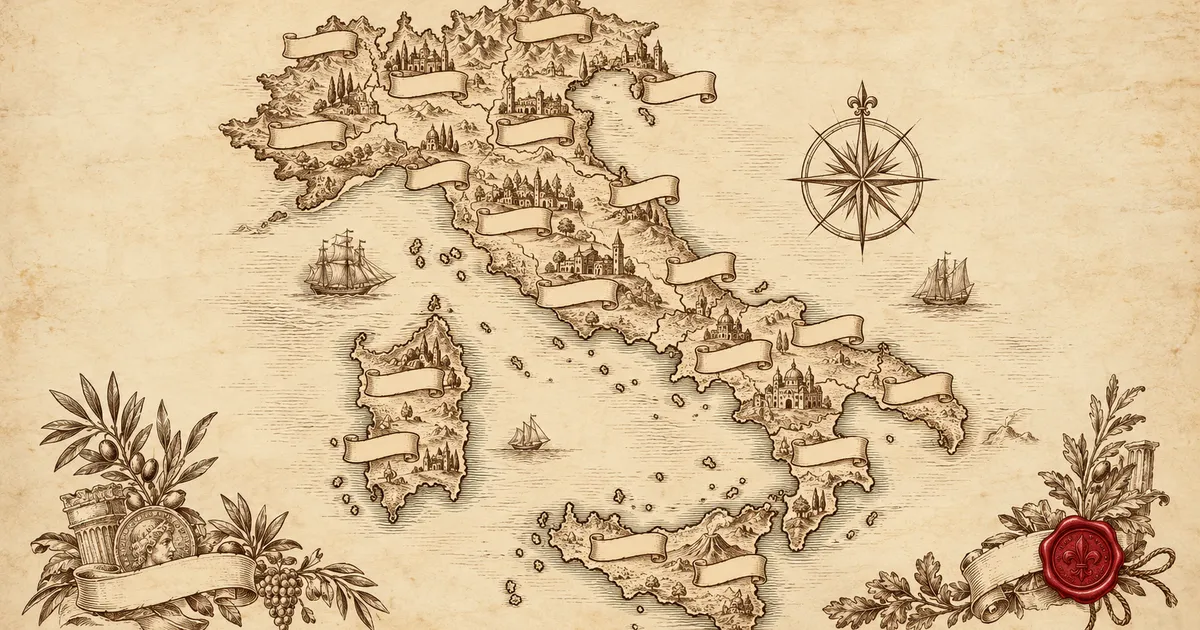
The most common surname in Italy is Rossi. The second is Russo. In the end they’re the same word, the nickname of a red-haired man. It’s Rossi in the North and Russo in the dialects of the South.
The national ranking, though, says little. Almost every region has a different winner, and each area has its own way of creating surnames.
What are the most common surnames in the North?
In the North alone there are more than two hundred thousand Rossis, as many people as a city the size of Padua. But in the individual regions, first place goes to others. In Lombardy the winner is Colombo. In Piedmont it’s Ferrero, also the most common in Turin. In Emilia-Romagna it’s Ferrari, in Genoa Parodi. In Friuli-Venezia Giulia Fabbro comes first, and in Trentino-Alto Adige Mair, the steward of the farm.
Three of these six surnames come from the same trade. In the North the blacksmith has nine surnames: Ferrari in Emilia, Ferrario in Brianza, Ferraris in Vercelli, Ferrero in Turin. Then Fabbri in Romagna, Fabbro and Fabris in Friuli, Favaro around Treviso, Favre in the Aosta Valley.
The North’s other signature is places. In Lombardy the surname often names the hometown. Brambilla, the ninth most common surname in the region, comes from Brembilla, a valley near Bergamo. In Veneto the name gets shortened: Marin, Zanon, Bortolin. In Friuli it gets smaller with -utti and -ussi. In Piedmont trades end in -ero, as in Barbero, the barber. In South Tyrol the surname is often the name of the house: Hofer is “the one from the farm.”
Bruno, on the other hand, has two homelands: it’s the third most common surname in Piedmont, but its other heart is in the South.
And in the Center?
In central Italy the signature is the father’s name, shortened and softened. In Florence Francesco became Cecco, Giovanni became Vanni, Leonardo became Nardo. That’s where Cecchi, Vanni, and Nardi come from. The final -i is the family plural: the Mancini, the Santi. And then diminutives, everywhere: Bartolini, Marinelli, Paolucci.
Lazio has one more sign. Notaries wrote in Latin, and the -is stayed attached to the surname: De Angelis, De Santis, De Carolis. Lazio has Rossi at the top and right behind it Mancini, the left-handed man. In Umbria the second most common surname is Ricci, someone with curly hair.
The surprise is in Tuscany. The region’s second most common surname is Innocenti, the name given to the babies left at the Spedale degli Innocenti in Florence from 1445 on. In Rome foundlings often became Proietti, from the Latin proiectus, “exposed.” Even today 94% of Proiettis live in central Italy.
Which surnames dominate in the South?
In the South the strongest surname is Russo: first in Sicily, second in Campania. In Campania first place goes to Esposito, which is also the most common in Naples. It was the surname of the foundlings of the Real Casa dell’Annunziata, given to all the “exposed” babies until 1814. Third in Campania is Romano, which is also seventh in Italy.
D’Angelo is number one in Abruzzo. Greco is second in Apulia, Rizzo third. In Calabria the second most common surname is Romeo, which in Greek meant “Roman.”
The South’s signature is easy to spot. Di and De in front of a name mean “son of”: De Luca, Di Stefano, Di Martino. Nicknames are very strong too: Russo, Caruso, Longo, Grasso. Southern Italy spoke Greek before it spoke Italian, and the accent at the end of Calò, Macrì, and Laganà is often the sign of it. Basile comes from a Greek name too.
And on the islands?
In Sicily the most common surname is Russo. The second is Messina, though the surname is most common in Palermo. Third is Caruso, which in Sicilian means “boy,” the errand boy. Fourth is Lombardo: that’s what Sicilians called the settlers who came from the North with the Normans.
The island has two signatures of its own. One is the article in front of the name: Lo Presti, La Rosa. The other is cities. Catania, Licata, and Butera were, most likely, the nicknames of people who had arrived from there.
Sardinia resembles no one else. Its most common surname is Sanna, “tusk” in Sardinian, already written in documents from 1119. The second is Piras, “pears.” Endings in -s and -u, like Melis and Porcu, are typical of the island.
Why does each area have its own signature?
Because surnames were born when Italy spoke different languages. The blacksmith in Turin and the one in Treviso did the same work, but called it by different names. Then each area had its own peoples, from the Lombards to the Arabs.
There’s also a thread that runs through the whole country. Every city had a hospital for foundlings, and many gave them a surname of their own. Colombo in Milan, Innocenti in Florence, Proietti in Rome, Esposito in Naples. Two of them are still the most common in their region today: Colombo in Lombardy, Esposito in Campania.
Does a common surname mean a single family?
No. The more common a surname is, the more times it was born. Every town had its red-haired man, and his children became Rossi or Russo without being related to anyone. And not every Colombo descends from a foundling: the surname was already widespread for other reasons.
The origin of the surname tells you where the word comes from. To know which line you come from, you need the records: the registry office, civil registration, parish registers.
Where can you find your surname?
Our three volumes each gather 300 surnames, from the most common in each region to those that live almost entirely in a single valley. Each surname has its own entry: origin, a map of the regions, variants, and a fun fact. At the back there’s a guide to start searching for your ancestors.
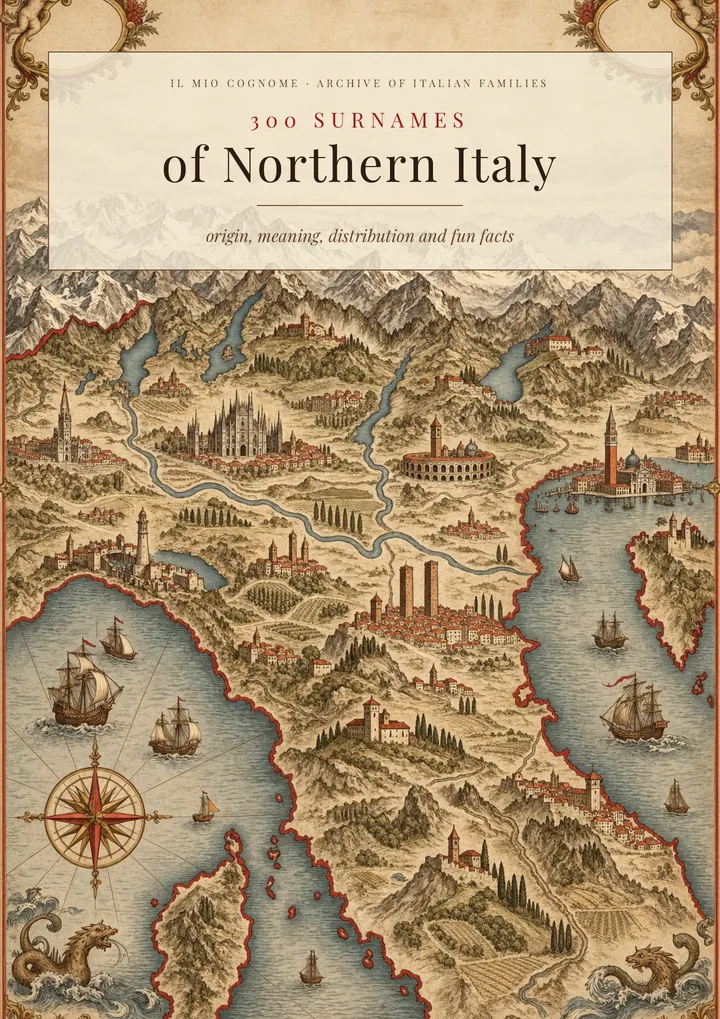
Surnames of Northern Italy
300 surnames · €19.90
Buy · €19.90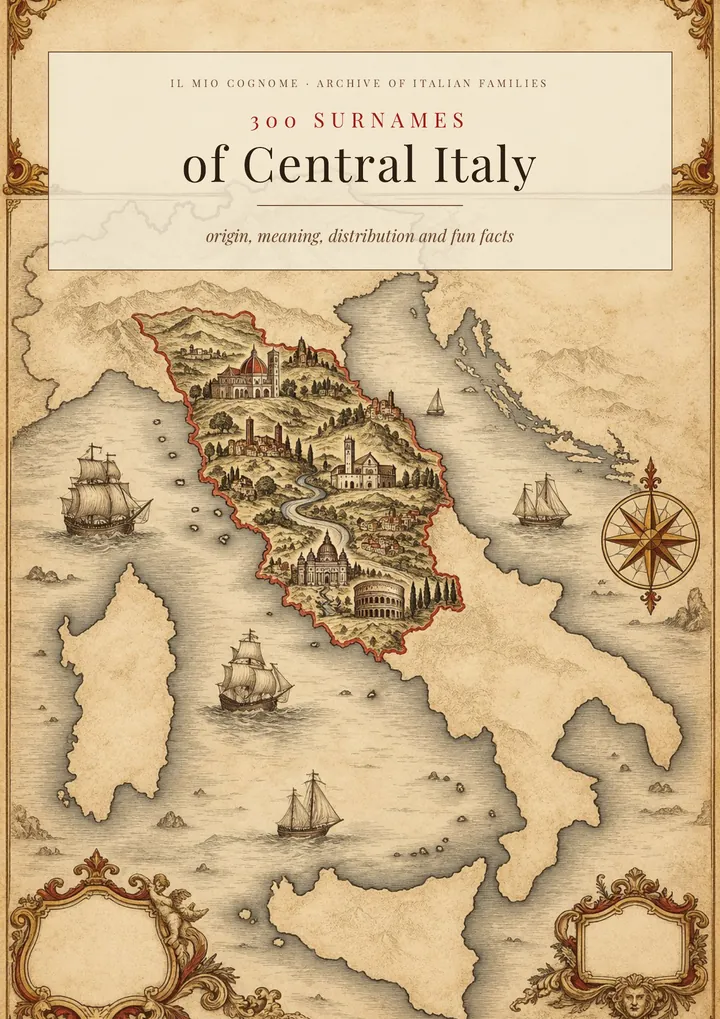
Surnames of Central Italy
300 surnames · €19.90
Buy · €19.90
Surnames of the South and the Islands
300 surnames · €19.90
Buy · €19.90Want to know where your surname comes from? Look it up in the catalog or explore the volumes by area of Italy.