October 2, 2026 · 6 min read
The Surnames of Italy’s Foundlings, from Esposito to Proietti
Esposito is the most common surname in Naples and in the whole of Campania. In Italy about 35,600 families carry it. Behind it lies a story of poverty: it was the surname given to abandoned babies.
Every city had its own way of naming foundlings, and some of those names are now among the most common in Italy.
Who were the foundlings?
They were newborns left by mothers who couldn’t keep them. Often the reason was poverty: one more child was a mouth the family couldn’t feed. Other times the baby had been born outside marriage, and the mother had to hide it.
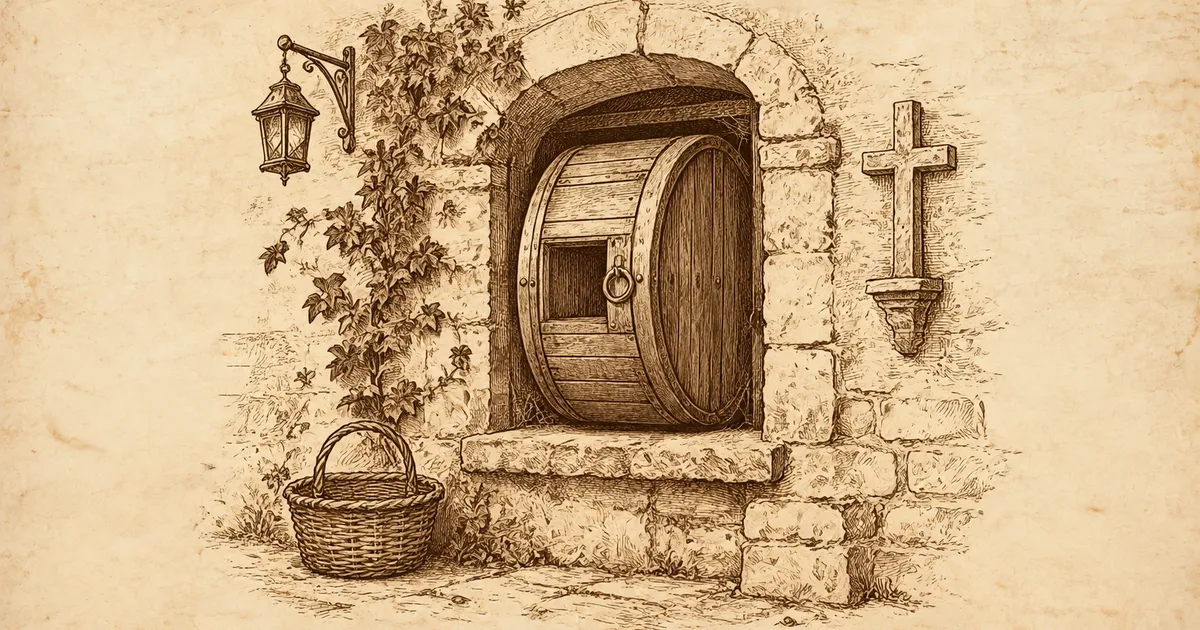
Cities had dedicated hospitals for them, later called foundling homes (brefotrofi). The baby was left in the foundling wheel (ruota degli esposti), a revolving wooden cylinder set into the wall. The newborn was placed in the outer opening, the wheel was turned, and a bell was rung. On the other side someone took the baby in, without seeing who had left it.
According to tradition, the first wheel in Italy was installed by Pope Innocent III in 1198, at the hospital of Santo Spirito in Sassia, in Rome. A decree of 1923 abolished them across the country.
The mother often left a small object next to the baby: half of a broken medal, a button, a ribbon. It was meant to identify the child if she ever came back to look for it. In the archive of the Spedale degli Innocenti in Florence, those objects are still kept.
How was a foundling’s surname chosen?
The baby arrived without a name. It was baptized, and someone had to write a surname in the register. Each institution had its own habits, and that’s why foundling surnames change from city to city.
Often the surname simply said what had happened. Esposito comes from the Latin expositus, “exposed,” left out. It was given to babies left in front of churches or in the wheel, entrusted to the protection of the Virgin Mary. In Naples it was assigned by the Real Casa dell’Annunziata, and it was used for all foundlings until 1814.
In Rome, Umbria, and Lazio, the name was Proietti, from the Latin proiectus, “thrown out, exposed.” Babies left in the wheel or on a church’s steps were recorded as proiecti. Today 94% of Proiettis live in central Italy.
Other times the surname recalled the institution. In Florence the Spedale degli Innocenti opened in 1445, with its portico designed by Brunelleschi. Children taken in there became Innocenti, Degl’Innocenti, or Nocentini, in memory of the Holy Innocents killed by Herod.
In Milan the symbol of the Ospedale Maggiore was a dove, colomba. Until 1825 many of the hospital’s foundlings received the surname Colombo. In Romagna many became Casadei, “house of God,” as the hospices were called.
Which ones became common surnames?
Today Esposito counts about 35,600 families, Colombo about 28,800, Innocenti about 8,100, and Proietti about 5,100. Not all of them descend from a foundling. But the children taken in numbered in the thousands, and those who grew up passed the surname on to their children and grandchildren.
Colombo is now the most common surname in Lombardy, and Innocenti the second most common in Tuscany. Proietti and Casadei are among the most widespread in central Italy and Romagna.
Next to the big ones there are smaller surnames. Alunni, typical of the area around Perugia, comes from the Latin alumnus, “raised”: a child brought up by a wet nurse or in a foundling home. Salvati, “saved,” was sometimes a name of gratitude given to the children taken in. In the South there’s Buonpensiero, “good thought,” very rare, found between Foggia and Naples. Most likely it was a foundling name too: institutions often gave names of good omen.
If you carry one of these surnames, do you descend from a foundling?
Not necessarily. Many of these surnames were also born in other ways. Colombo can come from the Latin name Columbus, from pigeon breeding, or from places like San Colombano. Casadei can be a good wish, “may this house belong to God”: in Milan there’s an Iohannes Cazadeum as early as 1188. Salvati can also come from the name Salvus, “safe and sound.”
Even when the origin is clear, as with Esposito, the surname doesn’t tell you which line you come from. The foundlings numbered in the thousands, and each one started a new family. Two Espositos from distant towns are most likely not related.
The origin of the surname and the story of your family are two different searches. The second goes through documents: civil registration records, many of which can be viewed on the Portale Antenati, and parish registers. For foundlings there are also the archives of the foundling hospitals, which have survived in many cities.
Why aren’t these surnames given anymore?
Over time people realized that these surnames marked a person for life. Anyone named Esposito or Proietti carried their origin written in their name.
Some states banned the practice as early as the 1800s, like the Kingdom of Naples under Murat. In 1939 Italy’s civil registration law banned it nationwide. For a baby of unknown parents, the registrar could no longer give a surname that revealed an illegitimate birth, nor one that was ridiculous or shameful.
The surnames given before, however, have stayed. Today tens of thousands of families carry them, and for almost all of them they are simply their name.
Where to find your surname
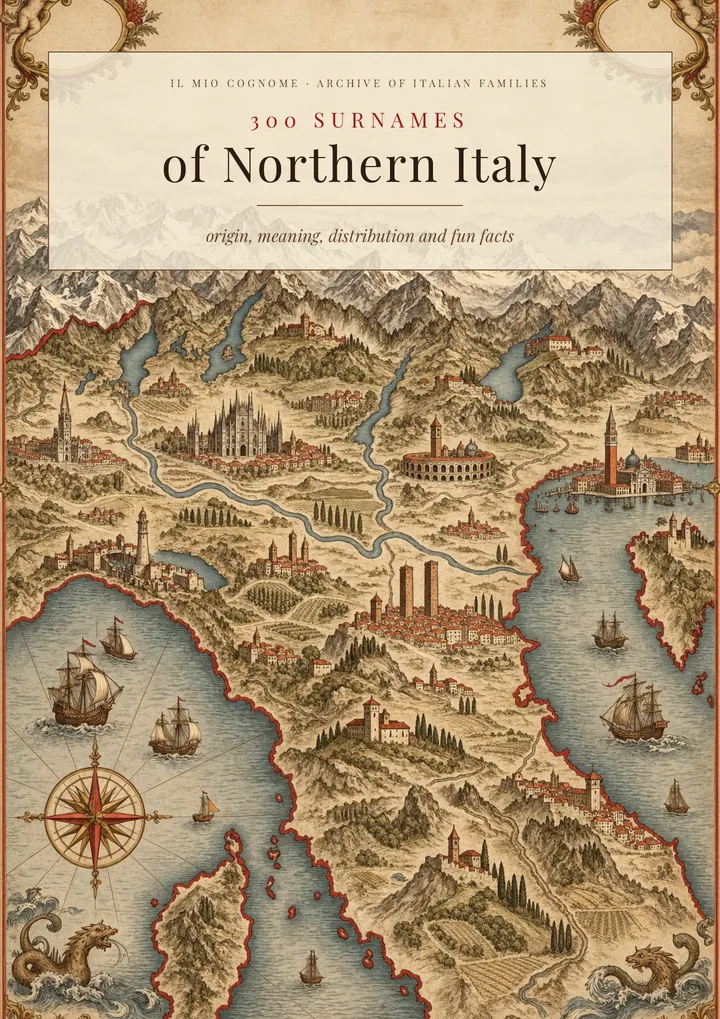
Esposito is in the volume on Southern Italy and the Islands, Colombo and Casadei in the one on the North. Innocenti, Nocentini, Proietti, and Alunni are in the volume on central Italy. The volumes on the North and the Center each devote a whole chapter to the foundlings.
Each surname has its own entry: where it comes from, what it means, where it lives today, its variants, and a fun fact. At the back of each volume there’s a guide to start searching for your ancestors, with a family tree to fill in.
Surnames of Northern Italy
300 surnames · €19.90
Buy · €19.90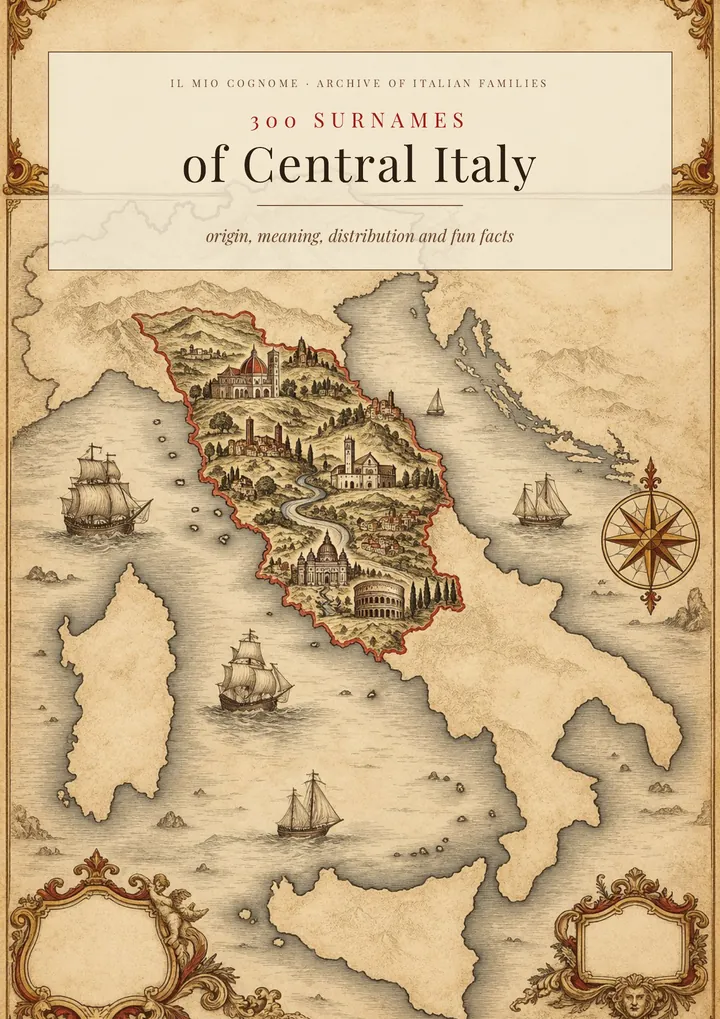
Surnames of Central Italy
300 surnames · €19.90
Buy · €19.90
Surnames of the South and the Islands
300 surnames · €19.90
Buy · €19.90Want to know where your surname comes from? Look it up in the catalog or explore the volumes by area of Italy.