
Umbria’s surnames, people by people
Before Rome, the left bank of the Tiber belonged to the Umbrians, a people of shepherds and farmers, and on the right bank were the Etruscans, with Perugia and Orvieto. Of the Umbrian language one unique treasure survives: the Iguvine Tablets, seven bronze plates from Gubbio. Then came the Romans with the Via Flaminia, opened in 220 BC, and a few surnames even preserve the names of their old families: Sensi from the gens Sentia, Porzi from the gens Porcia.
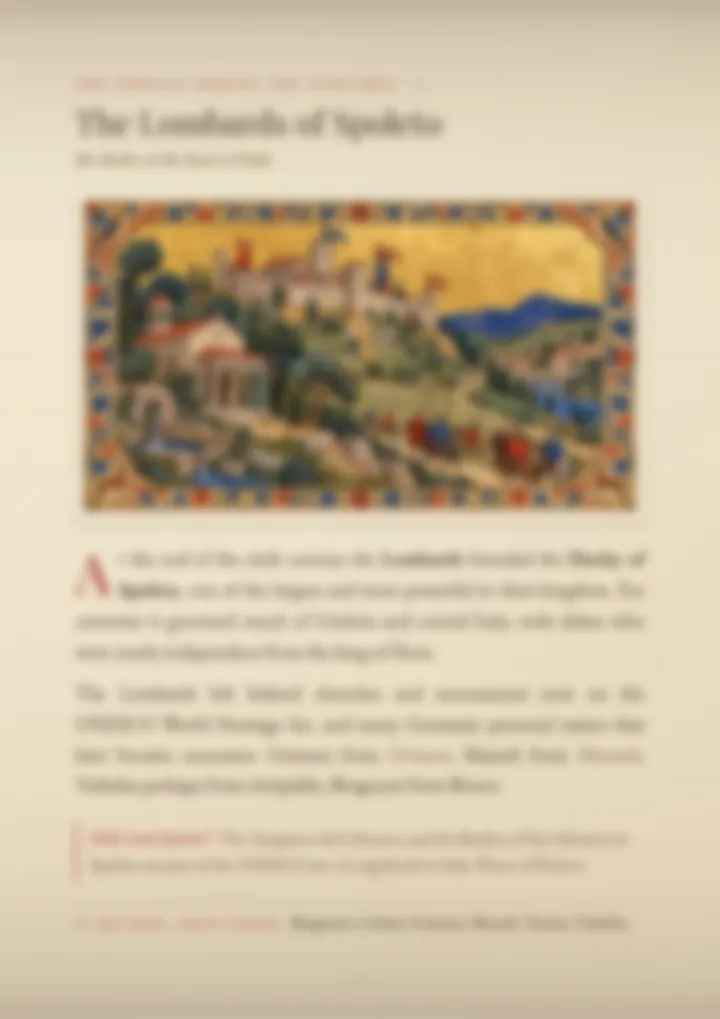
At the end of the 6th century the Lombards founded the Duchy of Spoleto, which for centuries governed much of the region: Grimani and Massoli come from Germanic personal names. Meanwhile the Byzantines defended the corridor between Rome and Ravenna, which ran through Perugia, Todi and Amelia, and brought Greek names of saints: Ambrogi, Calisti, Panfili. Saint Benedict came from Norcia, Saint Francis and Saint Clare from Assisi, and the abbeys gave rise to surnames like Abbati and Monacelli.
In the Middle Ages every Umbrian city was a small state, and the town someone came from became a surname: Brufani from Brufa, Valecchi from Valecchio. From the 16th century until Unification, Umbria was part of the Papal States, and Baiocco comes from the pope’s little coin. Alunni, from the Latin alumnus, was a child raised by a wet nurse or in a charitable home, and Massarelli comes from the massaro, the steward of the sharecropped farms.
The volume gives a chapter to each of these ten peoples and stories. For nearly all of them it lists the surnames in the book that carry their mark.
How to recognize an Umbrian surname
Some signs are easy to spot. The father’s name, often shortened and made affectionate: Domenico becomes Menco and then Mencarelli, Francesco becomes Cecco and then Ceccaroni, Bartolomeo becomes Bartolo and then Bartocci. Then the endings -ucci, -elli, -etti and -oni, sometimes two at once: Fiorucci, Filippucci, Mencarelli, Peppoloni, Tognoloni.
The final -i marks the family: the children of Fioruccio are the Fiorucci. In medieval documents the surname was often written in Latin in the genitive, Iohannes Bartoli, “Giovanni, son of Bartolo,” and that -i stuck. The ending -ucci is a true signature of central Italy.
Province by province
At the back of the volume an index gathers the surnames most common in each province. There are 157 surnames from the book, spread across the two provinces, Perugia and Terni. Then comes the list of the 11 Umbrian towns where a surname from the book is the most common. In Magione, on Lake Trasimeno, No. 1 is Alunni.
Is your surname in the volume?
Type it below: we'll tell you right away if it's there, and in which volume.
- Abbati
- Agabiti
- Aisa
- Alunni
- Alunno
- Ambrogi
- Antimi
- Apostolico
- Arcelli
- Argenti
- Aristei
- Ascani
- Baiocco
- Baldelli
- Baldinelli
- Baldoni
- Bambini
- Banella
- Barbanera
- Barbarossa
- Barcaroli
- Bartocci
- Bartoccini
- Bartoccioni
- Bastianini
- Battistelli
- Becchetti
- Bellachioma
- Bellavita
- Bellezza
- Biancalana
- Bianconi
- Biondini
- Bonucci
- Boriosi
- Bovini
- Brizi
- Brufani
- Brugnoni
- Bussetti
- Busti
- Caiello
- Calderini
- Calisti
- Calzoni
- Capitanucci
- Capoccia
- Capotosti
- Cardoni
- Carlani
- Carpinelli
- Cascianelli
- Cavalletti
- Cavallucci
- Ceccagnoli
- Ceccaroni
- Cecchetti
- Cerquaglia
- Cesarini
- Checcarelli
- Chianella
- Chionne
- Cicchi
- Cicioni
- Contessa
- Corazzi
- Costanzi
- Crisanti
- Crispoldi
- Crocioni
- Cruciani
- Dionigi
- Dominici
- Emili
- Ercolanoni
- Fagioli
- Faina
- Falchetti
- Falcinelli
- Falini
- Fanini
- Favaroni
- Filippucci
- Fiorelli
- Fioriti
- Fioroni
- Fiorucci
- Floridi
- Francescangeli
- Furiani
- Gagliardoni
- Garofoli
- Gentileschi
- Germini
- Giovagnoni
- Giuliacci
- Giulietti
- Gobbini
- Goracci
- Grimani
- Gubbini
- Gubbiotti
- Lanari
- Leandri
- Leonori
- Lepri
- Locchi
- Longetti
- Lucaccioni
- Lucaroni
- Luna
- Lupattelli
- Lupini
- Maccarelli
- Magnini
- Marcaccioli
- Marinacci
- Mariucci
- Masciotti
- Massarelli
- Massoli
- Mastrini
- Mattiacci
- Mencarelli
- Mencaroni
- Menichetti
- Menichini
- Meniconi
- Mezzasoma
- Milli
- Minciarelli
- Monacelli
- Montagnoli
- Montanucci
- Montioni
- Morettini
- Moscetti
- Nini
- Paciotti
- Panfili
- Paparelli
- Pascolini
- Passeri
- Pennacchi
- Peppoloni
- Perni
- Pettirossi
- Picchiarelli
- Picchio
- Piermarini
- Pierotti
- Piselli
- Pizzoni
- Porzi
- Posti
- Primieri
- Procacci
- Prosperini
- Quondam
- Radicchi
- Ragni
- Ranocchia
- Raspa
- Renzini
- Ricciarelli
- Rocchini
- Rogari
- Rondoni
- Roscini
- Rosignoli
- Salari
- Sargenti
- Sargentini
- Saveri
- Scarponi
- Segoloni
- Selvi
- Sensi
- Sensini
- Settimi
- Siena
- Sordini
- Spaccini
- Spigarelli
- Stoppini
- Stramaccioni
- Tabarrini
- Tascini
- Tini
- Tognoloni
- Tosti
- Trabalza
- Trombettoni
- Valecchi
- Vantaggi
- Verducci
- Vergoni
- Veschi
- Vignaroli
- Vinti
- Antoniacci
- Babucci
- Barbaccia
- Bastioli
- Bazzucchi
- Befani
- Belia
- Berellini
- Berettoni
- Bibi
- Biccheri
- Binaglia
- Bistocchi
- Boccali
- Boncio
- Branda
- Brozzetti
- Buratta
- Burzigotti
- Calzola
- Capaccioni
- Capitini
- Ceccarani
- Ceppitelli
- Cerboni
- Cerquiglini
- Chiavini
- Ciancabilla
- Ciavaglia
- Ciliani
- Comodi
- Coppetti
- Corbucci
- Cozzari
- Cucchiarini
- Cupello
- Fabbretti
- Fastellini
- Ficola
- Fondacci
- Foscoli
- Frascarelli
- Giammarioli
- Gigliarelli
- Giontella
- Giulivi
- Iachettini
- Lisetti
- Lupparelli
- Mannaioli
- Manuali
- Marioli
- Masciolini
- Materazzi
- Mattoni
- Mecarelli
- Menciotti
- Mincigrucci
- Minestrini
- Mortaro
- Pagliacci
- Palazzoli
- Pannacci
- Patacca
- Pernazza
- Pescari
- Pignattini
- Poggiani
- Polchi
- Presciutti
- Pucciarini
- Pugnali
- Purgatorio
- Quintili
- Ragnacci
- Rambotti
- Rampiconi
- Rellini
- Riganelli
- Salciarini
- Scarabottini
- Scassellati
- Sforna
- Sisani
- Sonaglia
- Sorbelli
- Squarta
- Staccini
- Stefanetti
- Tortoioli
- Trappetti
- Trastulli
- Traversini
- Uccellani
- Varazi
- Venarucci
- Versiglioni
- Veschini
- Zoppitelli
- Zugarini
Surnames in red also have their own booklet.
FAQ
Is my surname in the volume?
The full list of the 300 surnames is on this page. If yours isn’t there, request it through our contact page: new booklets come from the most requested surnames.
How is it different from the volume on Central Italy?
The Central Italy volume picks 300 surnames from four regions. This one is devoted to Umbria alone: ten chapters on the region’s peoples and stories and, when there is one, the place in Umbria where each surname ranks highest. 20 surnames are in both: the other 280 you’ll find only here.
Will I find the surnames of my province?
At the back of the volume an index gathers the surnames most common in each province. There are 157 surnames from the book, spread across Perugia and Terni. There’s also the list of the 11 Umbrian towns where a surname from the book is the most common.
What’s the difference between the volume and a surname booklet?
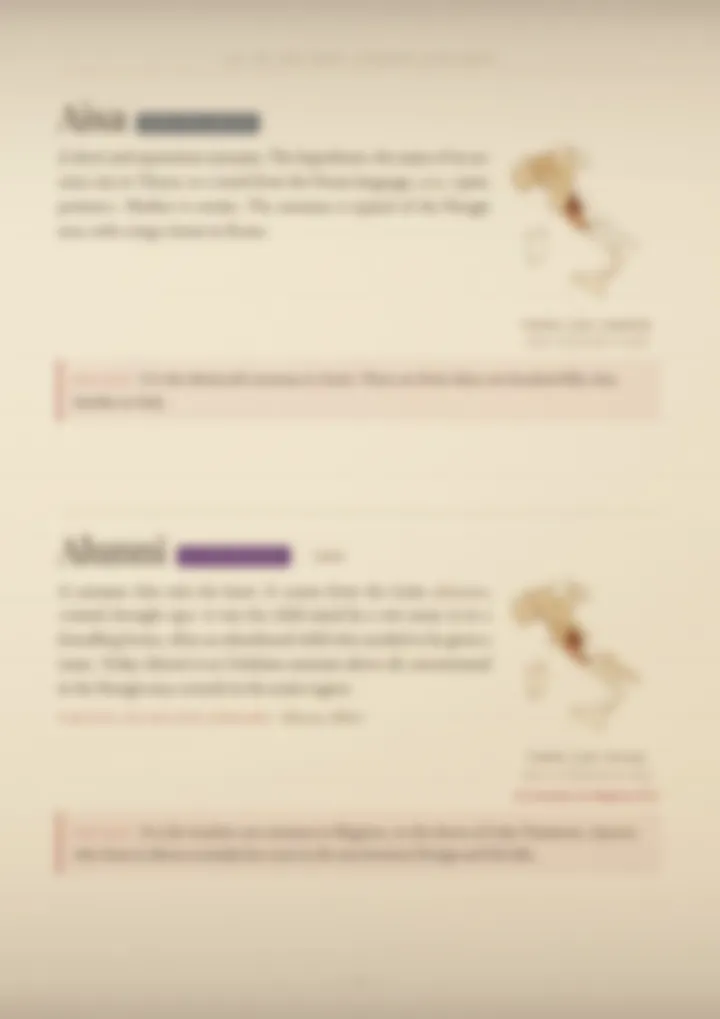
In the volume each surname has a half-page entry: origin, map, variants and a fun fact. The booklet is devoted to a single surname and tells its story, its towns and its distribution in 12-19 pages. It also has a family tree and a surname scroll personalized with that surname.
Does the volume tell me who my ancestors were?
No. A surname tells you where a word comes from, and two families with the same surname can have completely different stories. At the back of the volume there’s a guide to searching for your ancestors in the archives, free and from home. It includes tips for Umbria, where civil registration already began under Napoleon, from about 1809 to 1814: after that the records went back to the parish priests until Unification, and from 1861 the municipalities kept them.
Does the volume include my surname’s coat of arms?
No, because a surname has no coat of arms. A coat of arms belonged to one specific branch of a family, not to everyone who carries the surname. When a fun fact mentions one, the entry says which family it belonged to.
What if scholars disagree about the origin?
We tell you. When an origin is certain, it’s written as certain. When it isn’t, the entry carries the gray “disputed origin” badge and gives you the theories. For some extremely rare surnames that nobody has studied yet, the entry says exactly that.
Can I print it?
Yes, for personal and family use: you can print it for yourself and your relatives.
