
The surnames of Trentino-Alto Adige, people by people
Before the Romans the Adige valleys were home to the Raetians, an alpine people of shepherds and farmers. Then came the Romans, who founded Tridentum, today’s Trento, and Emperor Claudius had the Via Claudia Augusta repaired, which led over the Resia Pass all the way to the Danube. In the 6th century the Lombards made Trento the capital of one of their duchies, and the Bavarians arrived from the North: from names like Bertoldo, Gottardo, Odorico and Enrico come, in Trentino, Bertoldi, Gottardi, Odorizzi and Endrizzi.
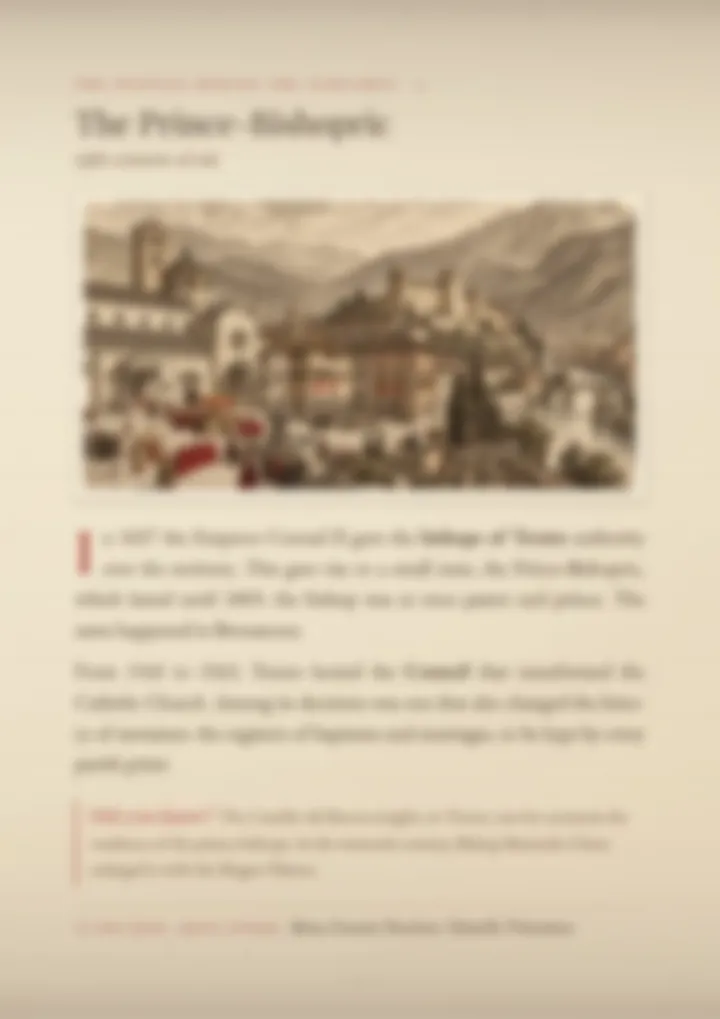
In 1027 Emperor Conrad II gave the bishops of Trento the rule of the territory: that is how the Prince-Bishopric was born, and it lasted until 1803. The castle of Tirol, above Merano, gave its name to a county that passed to the Habsburgs in 1363, and in South Tyrol farmers lived in masi, isolated farmsteads on the slopes. Often the name of the farmstead became a surname: Hofer is “the one from the farmstead,” Egger the one from the farmstead on the hilltop, Gasser the one on the little lane, Pichler the one on the hill. In Val Gardena, Val Badia and Val di Fassa people still speak Ladin, and in the Mòcheni valley and at Luserna, the Cimbrian village, the old German dialects can still be heard.
In Trentino many surnames come from the father’s name, with the preposition “de” in front: de Carli, the people of Carlo, de Gasperi, the people of Gaspare. Elsewhere in Italy the “de” stayed separate; here it almost always fused with the name. Trades and nicknames gave other surnames: in German the farmer was the Meier, which gave Mair, the most common surname in the region. And in the second half of the 1800s tens of thousands of people from Trentino left, for Brazil, Argentina and the United States.
The volume gives a chapter to each of these nine peoples and stories, and for each one it lists the surnames in the book that carry its mark.
How to recognize a surname from Trentino or South Tyrol
Some signs are easy to spot. The “de” attached to the father’s name, typical of Trentino: Decarli, Degasperi, Dellantonio, Deflorian. The diminutives in -elli, -otti and -izzi: Leonardelli, Pedrotti, Endrizzi. In South Tyrol, on the other hand, the German ending -er, “the one from”: Hofer, Egger and Thaler are the people of the farmstead, the hilltop, the valley. In the mountains the place was almost always the farmstead: whoever lived at the farmstead on the hill became Pichler, whoever lived in the valley floor became Thaler.
Province by province
At the back of the volume an index gathers, province by province, the surnames most common there: 286 surnames from the book, spread across the two provinces, Bolzano and Trento. Then comes the list of the 55 towns in Trentino-Alto Adige where a surname from the book is the most common: in Trento, for example, No. 1 is Tomasi, and in Bolzano it is Pichler.
Is your surname in the volume?
Type it below: we'll tell you right away if it's there, and in which volume.
- Aichner
- Alber
- Amistadi
- Andreatta
- Andreolli
- Armani
- Bacher
- Bachmann
- Baldessari
- Bazzanella
- Beber
- Berger
- Berlanda
- Bernard
- Bertagnolli
- Bertamini
- Bertoldi
- Betta
- Bettega
- Bisoffi
- Blaas
- Bolognani
- Bombardelli
- Boninsegna
- Bridi
- Brugger
- Brugnara
- Brunner
- Burger
- Calliari
- Calza
- Carlin
- Casagranda
- Cattoi
- Chini
- Chiocchetti
- Chistè
- Ciola
- Comper
- Conci
- Covi
- Cristoforetti
- Curzel
- Dallago
- Debiasi
- Decarli
- Deflorian
- Degasperi
- Deimichei
- Dellantonio
- Demattè
- Demetz
- Depaoli
- Dorigatti
- Ebner
- Eccher
- Egger
- Endrizzi
- Engl
- Facchinelli
- Fait
- Fedrizzi
- Feichter
- Festi
- Fischnaller
- Floriani
- Fontanari
- Frei
- Fronza
- Fruet
- Gadler
- Gadotti
- Galvagni
- Gamper
- Gasperi
- Gasser
- Gatterer
- Gerola
- Giovanazzi
- Gottardi
- Gretter
- Groff
- Gruber
- Gufler
- Haller
- Hofer
- Holzer
- Holzner
- Huber
- Innerbichler
- Innerhofer
- Kaufmann
- Kerschbaumer
- Kirchler
- Klotz
- Kofler
- Kostner
- Ladurner
- Laimer
- Lamprecht
- Laner
- Larcher
- Lechner
- Leitner
- Leonardelli
- Libardi
- Loss
- Lunelli
- Mahlknecht
- Mair
- Mairhofer
- Manfrini
- Marchesoni
- Margoni
- Matteotti
- Mattivi
- Mayr
- Melchiori
- Menapace
- Meraner
- Messner
- Miorelli
- Miori
- Morandell
- Moser
- Mosna
- Mutschlechner
- Nardon
- Nicolodi
- Nicolussi
- Oberhofer
- Oberrauch
- Odorizzi
- Pancheri
- Pedrotti
- Pfeifer
- Pichler
- Piffer
- Pilati
- Pintarelli
- Pircher
- Pisetta
- Pixner
- Pizzini
- Platter
- Plattner
- Platzgummer
- Ploner
- Potrich
- Rainer
- Reichegger
- Reiterer
- Rigatti
- Rigotti
- Runggaldier
- Salvaterra
- Scalet
- Schenk
- Schrott
- Schwarz
- Schwienbacher
- Seeber
- Senoner
- Seppi
- Sighel
- Spitaler
- Staffler
- Stecher
- Steger
- Steiner
- Tabarelli
- Tait
- Tamanini
- Tappeiner
- Tasin
- Telser
- Thaler
- Tomasi
- Torboli
- Unterhofer
- Unterholzner
- Vanzo
- Visintainer
- Volgger
- Voltolini
- Weber
- Weger
- Weiss
- Weissteiner
- Wierer
- Wieser
- Winkler
- Zadra
- Zambotti
- Zampedri
- Zendri
- Zeni
- Zingerle
- Zomer
- Zontini
- Abram
- Aldrighetti
- Alimonta
- Anesi
- Arlanch
- Avi
- Bampi
- Baruchelli
- Belliboni
- Bertoluzza
- Bertotti
- Bonapace
- Bonfioli
- Bonmassar
- Bosin
- Boso
- Bragagna
- Broch
- Buffi
- Caldonazzi
- Caresani
- Caset
- Clauser
- Cologna
- Cont
- Cortelletti
- Dalfovo
- Dalpiaz
- Dalponte
- Dalvit
- Dariz
- Degiampietro
- Delladio
- Delpero
- Delvai
- Dorigoni
- Endrici
- Erspamer
- Fadanelli
- Fattor
- Fedel
- Fellin
- Ferrai
- Flaim
- Fondriest
- Foradori
- Frisanco
- Genetti
- Giacomuzzi
- Gios
- Girardelli
- Gius
- Graiff
- Ianes
- Inama
- Keller
- Lever
- Lucian
- Lucin
- Maistrelli
- Malfer
- Masè
- Mattevi
- Maturi
- Menestrina
- Moar
- Mochen
- Mottes
- Mussner
- Navarini
- Negherbon
- Nones
- Orler
- Pasolli
- Paternoster
- Pedot
- Pegoretti
- Pizzinini
- Polla
- Pontalti
- Pouli
- Rattin
- Rauch
- Reversi
- Riccadonna
- Salizzoni
- Scartezzini
- Slomp
- Sommavilla
- Stanchina
- Tavernini
- Tessadri
- Tevini
- Valentinelli
- Vettorazzi
- Zancanella
- Zanotelli
- Zortea
- Zuccatti
- Zuech
FAQ
Is my surname in the volume?
The full list of the 300 surnames is on this page. If yours isn’t there, request it through our contact page: new booklets come from the most requested surnames.
How is it different from the volume on Northern Italy?
The Northern Italy volume picks 300 surnames from eight regions. This one is devoted to Trentino-Alto Adige alone: nine chapters on the region’s peoples and stories and, when there is one, where each surname ranks in Trentino or South Tyrol. 10 surnames are in both: the other 290 you’ll find only here.
Will I find the surnames of my province?
At the back of the volume an index gathers, province by province, the surnames most common there: 286 surnames from the book, spread across the two provinces, Bolzano and Trento. There’s also the list of the 55 towns in Trentino-Alto Adige where a surname from the book is the most common.
What’s the difference between the volume and a surname booklet?
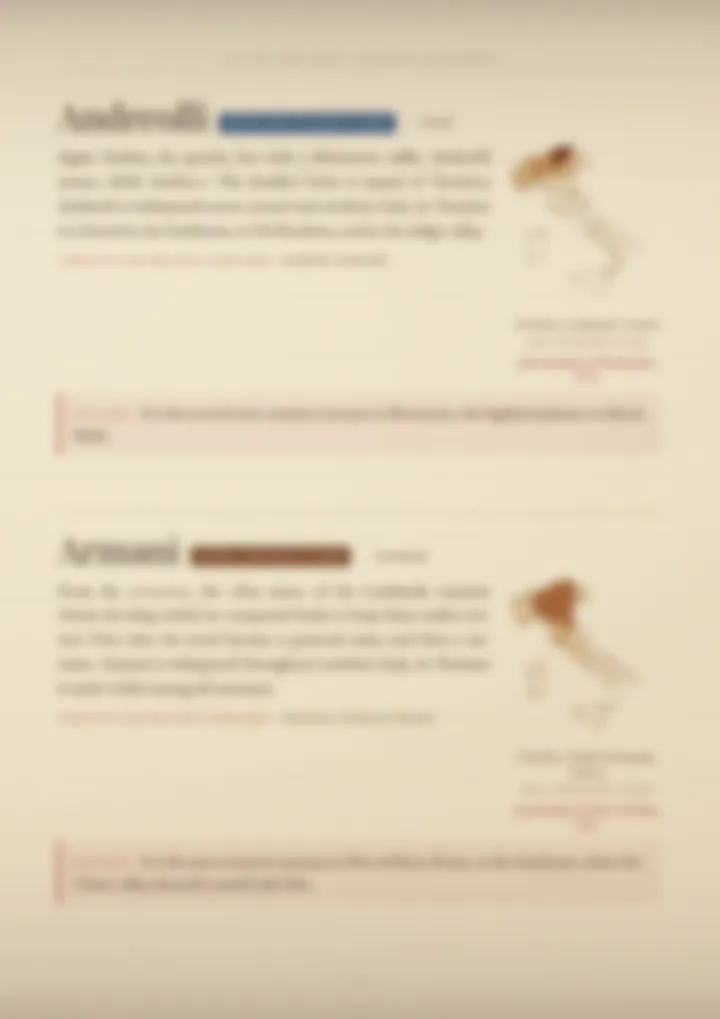
In the volume each surname has a half-page entry: origin, map, variants and a fun fact. The booklet is devoted to a single surname and tells its story, its towns and its distribution in 12-19 pages, with a family tree and a surname scroll personalized with that surname.
Does the volume tell me who my ancestors were?
No. A surname tells you where a word comes from, and two families with the same surname can have completely different stories. At the back of the volume there’s a guide to start searching for your ancestors in the archives, free and from home, with tips for Trentino-Alto Adige, where under Austria the parish priests kept the registers until 1923 and Italian civil registration began in 1924. For people born in Trentino between 1815 and 1923 there’s also an online index with more than a million names.
Does the volume include my surname’s coat of arms?
No, because a surname has no coat of arms: a coat of arms belonged to one specific branch of a family, not to everyone who carries the surname. When a fun fact mentions one, the entry says which family it belonged to.
What if scholars disagree about the origin?
We tell you. When an origin is certain, it’s written as certain; when it isn’t, the entry carries the gray “disputed origin” badge and gives you the theories.
Can I print it?
Yes, for personal and family use: you can print it for yourself and your relatives.