
Molise’s surnames, people by people
Before Rome, these mountains belonged to the Samnites, a people of shepherds and warriors who spoke Oscan. Molise was the heart of the territory of the Pentri, the strongest tribe, with its capital at Bovianum, today’s Bojano. The Samnites fought three long wars against Rome and lost, but their name survives: this land is still called Sannio. Then came the Romans, with Saepinum, Larinum and Venafrum, and many surnames in the book come from Latin.
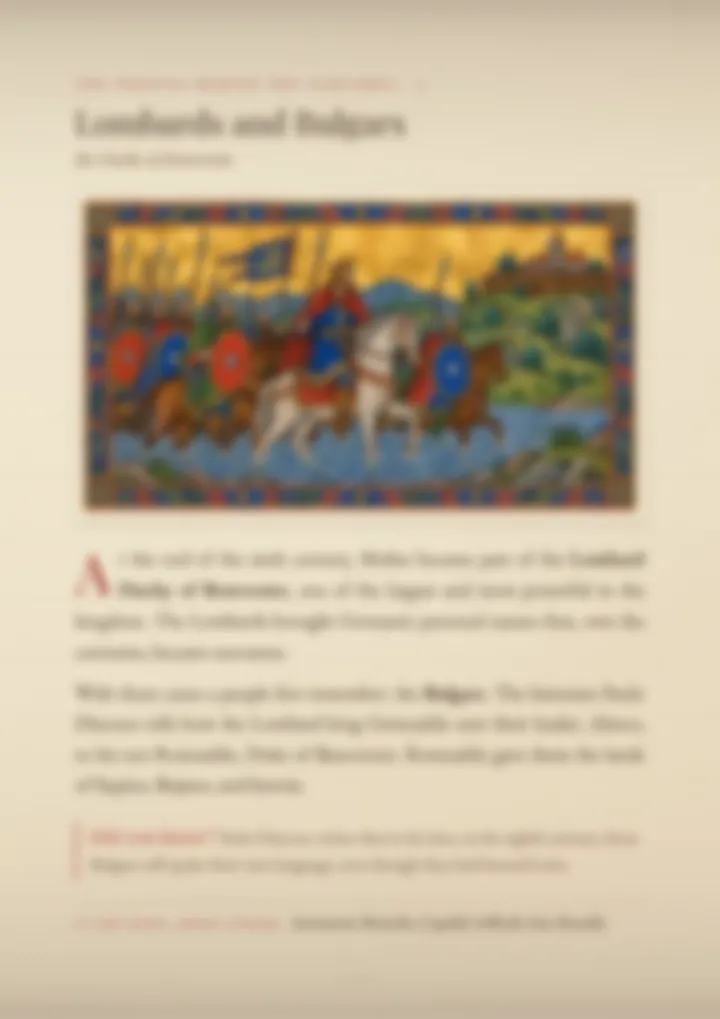
At the end of the 6th century Molise became part of the Lombard Duchy of Benevento, and with the Lombards came a people few remember, the Bulgars. In the 11th century came the Normans, who made the area a county centered on Bojano: the region’s name comes from their counts, de Molisio.
Between the 15th and 16th centuries many Slavic families left Dalmatia and settled in lower Molise: in Acquaviva Collecroce, Montemitro and San Felice del Molise an old form of Croatian is still spoken. The Albanians, the arbëreshë, came too, and in Campomarino, Montecilfone, Portocannone and Ururi old Albanian is still spoken. The shepherds’ tratturi, the craftsmen’s workshops and the patron saints gave rise to many more surnames.
The volume gives a chapter to each of these eleven peoples and stories. For nearly all of them it lists the surnames in the book that carry their mark.
How to recognize a Molisan surname
Some signs are easy to spot. The Di and De before the father’s name: Di Pardo, Di Lena, Di Iorio, De Lena. Double names joined into a single word: Colavita, Gianfelice, Iantomasi. The mastro, the master craftsman: Mastropaolo, Mastroiacovo, Mastromonaco. And the pet endings of the southern dialects, like -illo and -iello: Colalillo, Miniello, Nardolillo.
Most Molisan surnames come from a personal name, often shortened the way people did in town: Nicola becomes Cola, Giovanni becomes Gianni and Ianni, Francesco becomes Cicco. That is how a single name gives rise to dozens of different surnames.
Province by province
At the back of the volume an index gathers the surnames most common in each province. There are 150 surnames from the book, spread across the two provinces, Campobasso and Isernia. Then comes the list of the 30 Molisan towns where a surname from the book is the most common. In Isernia, No. 1 is Antenucci.
Is your surname in the volume?
Type it below: we'll tell you right away if it's there, and in which volume.
- Amicone
- Amorosa
- Angiolilli
- Antenucci
- Antonecchia
- Antonilli
- Armanetti
- Armenti
- Baranello
- Barrea
- Berardis
- Biello
- Caccavelli
- Cambio
- Capaldi
- Capretta
- Caranci
- Carano
- Chiacchiari
- Chiarizia
- Ciamarra
- Ciarallo
- Ciccaglione
- Ciccarella
- Cicchino
- Ciccotelli
- Cicerone
- Coia
- Colabella
- Colacci
- Coladangelo
- Colagiovanni
- Colalillo
- Colaneri
- Colasurdo
- Colavecchia
- Colavita
- Cordisco
- Cornacchione
- Cristinzio
- Cristofano
- Crivellone
- Cuculo
- Cutone
- D’Abramo
- D’Amicantonio
- D’Ascenzo
- D’Aversa
- De Camillis
- Del Busso
- De Lena
- Del Torto
- Del Zingaro
- De Notariis
- D’Ermes
- Di Cienzo
- Di Ciocco
- Di Cristinzi
- Di Florio
- Di Geronimo
- Di Giammartino
- Di Giglio
- Di Ielsi
- Di Iorio
- Di Iuorio
- Di Lalla
- Di Lallo
- Di Lena
- Di Lisa
- Di Lonardo
- Di Niro
- Di Nucci
- Di Pardo
- Di Pilla
- Di Re
- Di Sandro
- Di Sisto
- Di Tata
- Doganieri
- Donatone
- D’Uva
- Falcione
- Fantetti
- Farinaccio
- Fascia
- Fatica
- Fiorilli
- Forcione
- Formichelli
- Fratamico
- Fratangelo
- Giacomodonato
- Giancola
- Gianfelice
- Gianfrancesco
- Giannantonio
- Giorgetta
- Griguoli
- Iammarino
- Iannacci
- Iannacone
- Iannantuono
- Iannetta
- Ianniruberto
- Iantomasi
- Iavasile
- Ioffredi
- Ionata
- Iuliani
- Iurescia
- Izzi
- Lafratta
- Lancellotta
- Libertucci
- Licursi
- Litterio
- Lupacchino
- Macchiagodena
- Macchiarolo
- Maddonni
- Mainella
- Mancinella
- Manes
- Marcovecchio
- Marraffino
- Mastragostino
- Mastrogiorgio
- Mastrogiuseppe
- Mastroiacovo
- Mastromonaco
- Mastropaolo
- Matteo
- Messere
- Mezzacappa
- Micone
- Mignogna
- Minicucci
- Miniello
- Miniscalco
- Mirco
- Moffa
- Montazzoli
- Morcone
- Moscufo
- Mucciaccio
- Muccilli
- Muccillo
- Musacchio
- Nardolillo
- Nasillo
- Niro
- Occhionero
- Padulo
- Paglione
- Panichella
- Pannunzio
- Papiccio
- Patete
- Perazzelli
- Perrella
- Petrarca
- Petraroia
- Picciano
- Pietrangelo
- Pietrunti
- Pilla
- Plescia
- Porfirio
- Primiani
- Primiano
- Ranallo
- Ricciuto
- Salome
- Santella
- Santoianni
- Santone
- Scarabeo
- Sebastiano
- Sivilla
- Spallone
- Spensieri
- Spidalieri
- Staffieri
- Storto
- Tamasi
- Tamburri
- Terzano
- Tirabasso
- Tullo
- Valiante
- Vassalotti
- Veneziale
- Vignone
- Vincelli
- Vitantonio
- Vitone
- Vitulli
- Zappitelli
- Zappone
- Zeffiro
- Abiuso
- Berchicci
- Bracone
- Cacchione
- Calleo
- Campellone
- Campofredano
- Cannarsa
- Carmosino
- Casolino
- Castrataro
- Cefaratti
- Centracchio
- Cerimele
- Cerio
- Chimisso
- Chiovitti
- Ciafardini
- Cianfrani
- Ciarlariello
- Cifelli
- Cimorelli
- Ciummo
- Civico
- Colamaio
- Colitti
- D’Adderio
- D’Agnillo
- D’Aulerio
- Del Riccio
- De Socio
- Di Corpo
- Di Criscio
- Di Lisio
- Di Nezza
- Di Ninno
- Discenza
- Fraraccio
- Fuschino
- Gianfagna
- Gianserra
- Giovannitti
- Glave
- Iacampo
- Iacurto
- Iademarco
- Ialenti
- Iallonardi
- Iamartino
- Iammatteo
- Ianiro
- Iapalucci
- Iapaolo
- Iarocci
- Incollingo
- Intrevado
- Iocca
- Lamelza
- Lanese
- Larivera
- Latessa
- Laurelli
- Listorti
- Lomma
- Maglieri
- Mascilongo
- Masciotra
- Matticoli
- Meffe
- Melaragno
- Menanno
- Minadeo
- Muccino
- Mustillo
- Petrecca
- Pietraroia
- Potena
- Prioriello
- Rateni
- Ruccolo
- Ruscitto
- Santopolo
- Sappracone
- Scasserra
- Sepede
- Serpone
- Sferra
- Silvaroli
- Simiele
- Siravo
- Sorella
- Stinziani
- Tavone
- Tomaro
- Trivisonno
- Varanese
- Varriano
- Vergalito
- Vizzarri
- Zarlenga
Surnames in red also have their own booklet.
FAQ
Is my surname in the volume?
The full list of the 300 surnames is on this page. If yours isn’t there, request it through our contact page: new booklets come from the most requested surnames.
How is it different from the volume on the South and the Islands?
The South volume picks 300 surnames from eight regions. This one is devoted to Molise alone: eleven chapters on the region’s peoples and stories and, when there is one, the place in Molise where each surname ranks highest. 2 surnames are in both: the other 298 you’ll find only here.
Will I find the surnames of my province?
At the back of the volume an index gathers the surnames most common in each province. There are 150 surnames from the book, spread across Campobasso and Isernia. There’s also the list of the 30 Molisan towns where a surname from the book is the most common.
What’s the difference between the volume and a surname booklet?
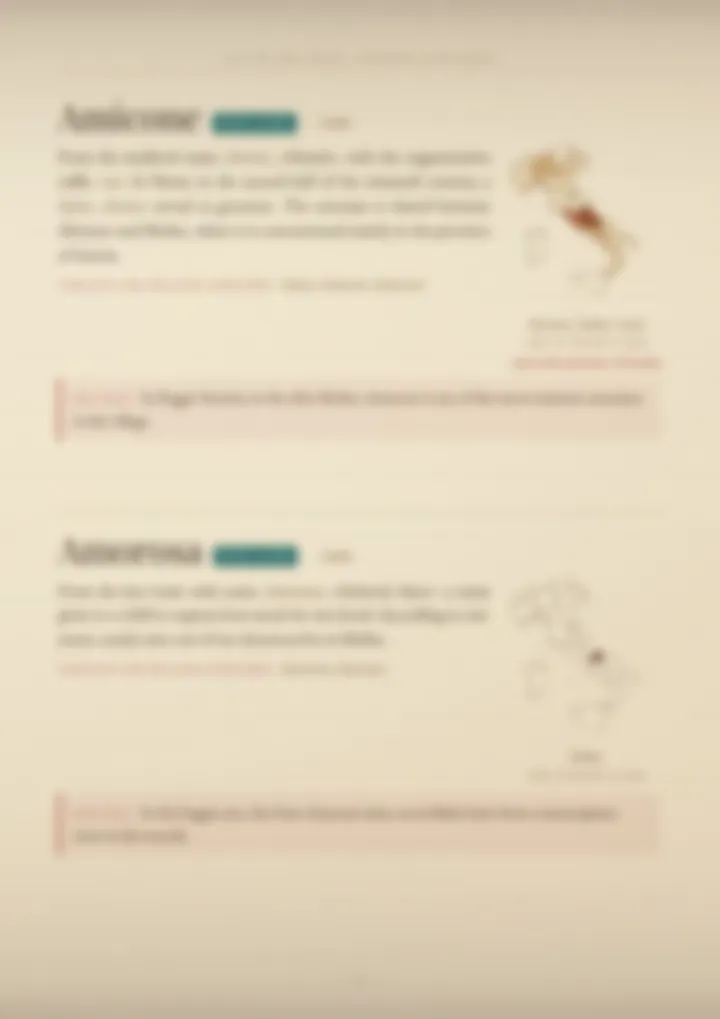
In the volume each surname has a half-page entry: origin, map, variants and a fun fact. The booklet is devoted to a single surname and tells its story, its towns and its distribution in 12-19 pages. It also has a family tree and a surname scroll personalized with that surname.
Does the volume tell me who my ancestors were?
No. A surname tells you where a word comes from, and two families with the same surname can have completely different stories. At the back of the volume there’s a guide to searching for your ancestors in the archives, free and from home. It includes tips for Molise, where, as in the whole Kingdom of Naples, the municipalities have kept civil registration records since 1809.
Does the volume include my surname’s coat of arms?
No, because a surname has no coat of arms. A coat of arms belonged to one specific branch of a family, not to everyone who carries the surname. When a fun fact mentions one, the entry says which family it belonged to.
What if scholars disagree about the origin?
We tell you. When an origin is certain, it’s written as certain. When it isn’t, the entry carries the gray “disputed origin” badge and gives you the theories. For some extremely rare surnames that, in the sources consulted, nobody has yet explained, the entry says exactly that.
Can I print it?
Yes, for personal and family use: you can print it for yourself and your relatives.
